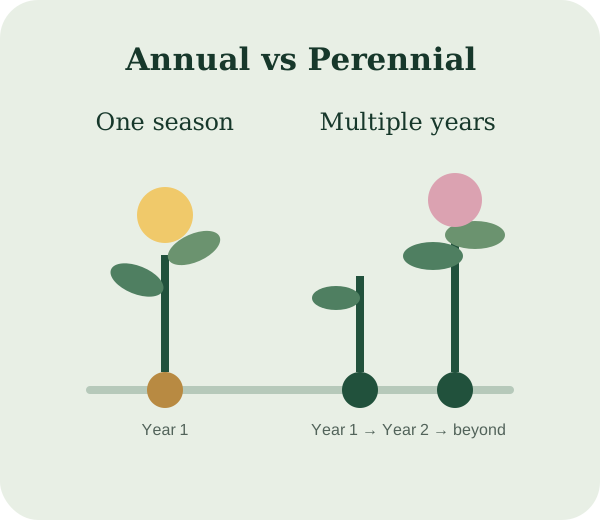
Annual, Biennial and Perennial Defined
West Virginia University Extension explains the basic categories clearly: annuals complete foliage, flowering and seed production in one growing season; biennials normally grow vegetatively in year one and flower/seed in year two; perennials live for more than two years.
What Is a Tender Perennial?
A tender perennial can live for several years in a frost-free or suitably mild climate but may be killed by winter cold elsewhere. Illinois Extension uses herbs such as bay and some rosemary-type plants to illustrate this issue and recommends checking hardiness zones.
This is why two gardeners can give apparently contradictory advice: one says “my rosemary is perennial,” another says “I replace it every spring.” Both can be correct in different climates.
How the 10 GardenGrow Plants Behave
| Plant | Typical life cycle | Beginner note |
|---|---|---|
| Calendula | Annual / cool-season annual | May self-seed, which can make it look perennial. |
| German chamomile | Annual | Roman chamomile is a different perennial species. |
| Echinacea | Perennial | Often spends its first season establishing. |
| California poppy | Annual to short-lived perennial depending climate | Frequently self-seeds where happy. |
| English lavender | Perennial shrub | Hardiness and winter drainage matter. |
| Yarrow | Perennial | Can persist and spread in suitable sites. |
| Feverfew | Short-lived perennial often grown as annual/biennial | Self-seeding can maintain a patch. |
| Chicory | Perennial, often managed as annual/biennial crop | Use determines harvest timing. |
| Marshmallow | Perennial | Develops into a larger long-term plant. |
| Evening primrose | Often biennial, species-dependent | Common evening primrose typically flowers in year two. |
“Medicinal herb” is a marketing/category label, not a botanical life-cycle category. Always check the exact species name on the packet because common names can refer to plants with different habits.
Why Life Cycle Matters for Garden Planning
Annuals are flexible: sow, grow and clear the bed within one season. Perennials need better long-term placement because they may occupy the same area for years. Biennials require patience and room across two seasons.
Before planting a perennial, think about mature width, winter drainage and whether the location will still make sense next year. Before planting an annual, think about succession sowing and whether you want to let it self-seed.
Does Perennial Mean Harder From Seed?
Not automatically, but many perennials are slower than annual herbs bred for one-season production. Some perennial seeds also carry dormancy mechanisms and may benefit from treatments such as cold stratification. Illinois Extension notes that many annual herbs are readily started from seed, while established plants, divisions or cuttings are often convenient for perennial herbs.
If you are new to seed starting, combine one or two fast annuals with one slower perennial rather than expecting every tray to progress at the same speed.
Containers and Overwintering
Containers can make tender perennials easier to move, but pots also expose roots to greater temperature swings than in-ground soil. Bringing a plant indoors only works if you can provide suitable light and avoid introducing pests.
Illinois Extension notes that herbs can grow well in containers when they have drainage holes and appropriate potting mix. The decision to overwinter a tender plant indoors should be based on available light and space—not simply because the plant is technically perennial.
Self-Seeding Is Not the Same as Being Perennial
Calendula, chamomile, California poppy and feverfew can reappear from dropped seed. That can look like one plant “coming back,” but biologically the original annual may be dead and a new generation has germinated.
This distinction matters for pruning and bed cleanup. If you want self-sowing, allow some seed heads to mature. If you want control, deadhead before seed ripens.
Why Climate Changes the Answer
Plant hardiness is regional. A perennial that survives Zone 7 winter may fail in Zone 4; a cool-season annual may struggle through intense summer heat; a short-lived perennial may behave almost like an annual in an unfavorable site.
Use your USDA hardiness zone for winter survival, but also pay attention to summer heat, humidity, drainage and local frost dates. Hardiness zone answers only part of the climate question.
Planning a 10-Herb Garden?
If you are comparing a bundled way to start several traditional herb-garden plants together, GardenGrow has an independent overview of the Medicinal Garden Kit offer. The overview focuses on what is included, who the kit may suit and what to verify before ordering.
See the 10-Herb Kit Overview →The overview contains affiliate links. Product details can change; confirm current contents, price, shipping and terms on the seller's official page.
Frequently Asked Questions
Is chamomile annual or perennial?
German chamomile is annual. Roman chamomile is a different species and is perennial, which is why the common name can cause confusion.
Is lavender a perennial?
Many lavenders are perennial shrubs where they are hardy, but winter cold and wet soil can shorten their life.
Can an annual herb come back next year?
The original annual plant dies after its life cycle, but self-sown seed can produce new plants the following year.
Are all perennials cold hardy?
No. Tender perennials may be killed by frost or winter cold outside their suitable climate.
Do biennial herbs flower the first year?
Typically they focus on vegetative growth in year one and flower in year two, although stress and climate can alter timing.
Sources and Editorial Notes
GardenGrow prioritizes university extension services, major horticultural organizations and practical propagation references. Gardening outcomes vary with climate, seed lot and cultivar; the exact packet instructions remain the most specific reference for your seed.