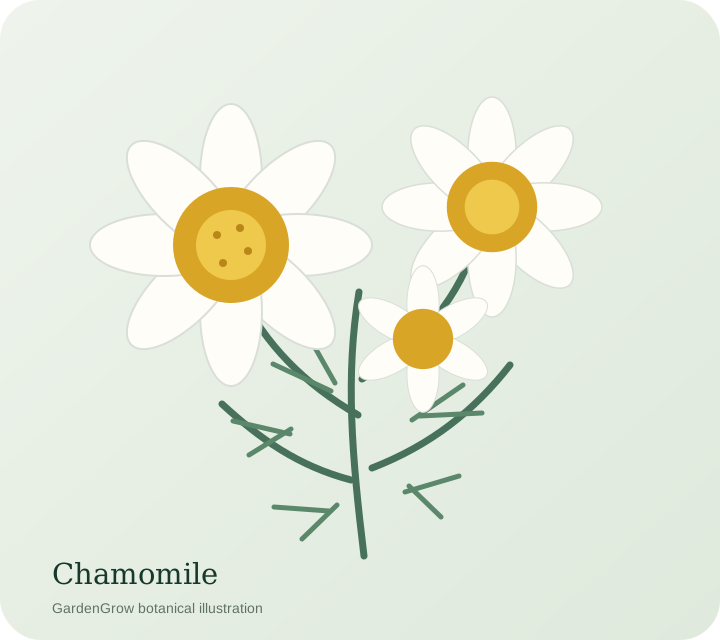
German vs Roman Chamomile: Check Your Seed Packet First
The name chamomile is used for more than one plant. The two gardeners see most often are German chamomile (Matricaria chamomilla, also sold under related botanical synonyms) and Roman chamomile (Chamaemelum nobile).
| Type | Life cycle | Growth habit | Best fit for this guide |
|---|---|---|---|
| German chamomile | Annual | Upright, branching; commonly grown from seed | Primary focus |
| Roman chamomile | Perennial | Lower, spreading growth | Some sowing principles overlap, but final habit differs |
University of Wisconsin Extension identifies German chamomile as an annual and Roman chamomile as a low perennial. That difference matters for spacing, height and what you should expect at the end of the season.
When to Plant Chamomile Seeds
German chamomile can be started indoors before the last frost or direct-sown outdoors. University of Wisconsin suggests indoor sowing around 6–8 weeks before the average last frost date. Johnny's Selected Seeds recommends starting transplants about 4–6 weeks before transplanting out. Both approaches point to the same practical idea: chamomile does not need months indoors.
For direct sowing, use a prepared seedbed in spring when the soil can be worked and severe cold is easing. RHS also recommends outdoor sowing into warm soil from mid-spring onward.
Indoor or direct sow?
Direct sowing avoids transplant shock and works well where spring weather is manageable. Indoor sowing gives you more control over moisture and weed competition, but the seedlings are tiny and easy to overcrowd. If you start indoors, transplant while plants are still young.
How to Sow Chamomile Seeds Step by Step
How Long Does Chamomile Take to Germinate?
A practical expectation is roughly 7–14 days. Johnny's Selected Seeds lists 10–14 days. University of Wisconsin notes that under warm conditions German chamomile may germinate within about a week.
Do not judge a seed lot by one calendar number. Temperature, seed freshness, light, moisture and how evenly the seed contacts the surface all affect emergence.
| If you see... | Check first |
|---|---|
| No seedlings after two weeks | Was seed buried? Did the surface dry? Was the area very cool? |
| Patchy germination | Uneven moisture, uneven seed distribution, old seed |
| Dense green carpet | Seed was sown too heavily; thin early for airflow |
Chamomile Light and Temperature
Light for germination
Chamomile seed needs light at the germination stage, which is why it is surface-sown. Indoors, place trays in a bright location or under grow lights after sowing rather than leaving them in a dark propagation corner.
Light after germination
German chamomile grows best in full sun. Wisconsin Extension describes full sun and well-drained soil as suitable conditions, and Johnny's lists sun as the light preference.
Temperature
Johnny's describes alternating day/night temperatures of about 68°F (20°C) and 86°F (30°C) for commercial-style germination. Home growers do not need to reproduce that exact regime; the key is to avoid a cold, saturated tray. Penn State notes that damping-off risk can increase with low soil temperatures before germination combined with excessive moisture.
How to Water Chamomile Seedlings
At the germination stage, the surface must stay moist because the seed is not buried. That does not mean the tray should remain soggy. Use a fine mister or careful bottom-watering so the upper layer stays evenly damp while air can still move through the mix.
RHS recommends keeping young chamomile evenly moist, then watering established plants mainly as needed in dry conditions. It also warns that chamomile dislikes very wet conditions.
Transplanting and Spacing Chamomile
Move seedlings once they are easy to handle rather than leaving them crowded in a tray. Johnny's recommends transplanting when seedlings are roughly 1–2 inches tall with 3–4 true leaves and notes that older German chamomile seedlings do not transplant as well.
Spacing guidance varies. RHS gives about 6 inches (15 cm) for young chamomile plants, while Johnny's uses 8 inches for German chamomile in its production system. For a home herb bed, roughly 6–8 inches is a useful starting range, adjusted for the cultivar on your packet.
Water after transplanting, then protect the young plants from strong drying wind or sudden heat until they re-establish.
Can Chamomile Grow in Containers?
Yes. Chamomile can be grown in pots as long as the container drains freely. Use a quality potting mix, avoid an oversized waterlogged container, and place the pot where it gets strong light.
Container plants dry faster than plants in the ground. RHS recommends checking potted chamomile frequently and keeping compost evenly moist while avoiding overwatering. If several seedlings share one pot, thin them so leaves are not packed together.
Why Are My Chamomile Seedlings Falling Over?
This is one of the most useful troubleshooting questions because “falling over” can describe two different problems.
1. Damping off: the stem collapses at soil level
If a seedling looks pinched, brown, water-soaked or rotten where the stem meets the mix and then falls, suspect damping off. Penn State explains that damping off is caused by fungi that rot seeds or newly emerged seedlings. Favoring conditions include excessive moisture, overcrowding and unsuitable temperature. RHS also highlights high humidity, poor airflow and overly dense sowing.
Prevention is more effective than rescue: use clean trays and fresh seed mix, sow thinly, avoid constant saturation, and improve ventilation after emergence.
2. Legginess: the seedling is long, pale and weak
If the stem is intact but stretched and floppy, the problem is often insufficient light. University of Minnesota Extension notes that low light makes seedlings elongate toward a light source, producing weak stems that struggle to support themselves.
| Symptom | Likely issue | Response |
|---|---|---|
| Brown/pinched stem at soil line | Damping off | Remove affected seedlings; reduce moisture; improve sanitation and airflow |
| Long, thin, pale stem | Low light / legginess | Increase light intensity and keep lights appropriately close |
| Whole tray stays soggy | Overwatering / poor drainage | Let air reach the mix; water less heavily |
| Seedlings tangled together | Overcrowding | Thin or prick out while small |
When Does Chamomile Flower?
RHS says seed-grown chamomile can begin flowering in as little as ten weeks. Treat that as a favorable-case benchmark rather than a promise. Light, sowing date, temperature, cultivar and transplant stress can all shift the schedule.
German chamomile produces many small daisy-like flowers through the season. Wisconsin Extension notes that plants continue flowering until seed ripens or frost arrives if flower heads are removed. RHS similarly notes that harvesting flowers encourages more production.
Harvesting flowers
Johnny's recommends gathering flowers at full bloom and drying them in a single layer in a dry, ventilated place out of direct sunlight. If you plan to consume home-grown chamomile, confirm the plant's identity and use a food-safety source appropriate to your use; this GardenGrow page is a cultivation guide, not medical advice.
Will Chamomile Come Back Next Year?
German chamomile is an annual, so the individual plant completes its life cycle in one season. However, it can self-seed readily. Wisconsin Extension and Johnny's both note this tendency.
If you want volunteers next year, leave some healthy flower heads to mature and drop seed. If you do not want chamomile appearing outside its bed, harvest or deadhead before large numbers of seeds ripen.
Want to Start More Than Chamomile?
If you are comparing ways to start several traditional herb-garden plants together, GardenGrow has an independent overview of a bundled 10-variety seed-kit offer that includes chamomile according to the seller. The overview explains the offer, what to verify, and who it may suit.
See the 10-Herb Kit Overview →The overview contains affiliate links. Verify the exact chamomile species/variety on the current product label before using species-specific growing instructions.
Chamomile Seed FAQ
Do chamomile seeds need light to germinate?
Yes. German chamomile seed should be surface-sown and pressed into the medium rather than covered with soil.
How long does chamomile take to germinate?
Roughly 7–14 days is a useful home-growing expectation. Johnny's lists 10–14 days, while Wisconsin Extension notes that warm conditions can produce germination within about a week.
Why are my chamomile seedlings falling over?
If stems rot or pinch at the soil line, damping off is a likely cause. If stems are long, thin and intact, insufficient light may be causing legginess.
Is chamomile annual or perennial?
German chamomile is annual. Roman chamomile is a separate low-growing perennial species.
Should I cover chamomile seed with soil?
No for German chamomile. Press seed onto the surface so it maintains contact with the moist mix while still receiving light.
Can chamomile grow in a pot?
Yes. Use a free-draining potting mix, strong light, drainage holes and careful watering.
Sources and Editorial Notes
GardenGrow uses university extension, major horticultural organizations and established seed-production references for cultivation facts. Species, cultivar, climate and seed-lot instructions can differ, so the seed packet you are actually growing is the final cultivar-specific reference.