Why Light Can Affect Germination
Seeds use environmental cues to decide whether conditions are suitable for growth. In some species, light reaching the seed helps trigger germination; in others, darkness or covering is normal. Penn State Extension notes that germination responses to light vary by species.
Small, light-responsive seeds are often naturally positioned near the soil surface. Burying them deeply can both block the light cue and make it harder for a tiny seedling to reach the surface with limited stored energy.
What Does 'Surface Sow' Mean?
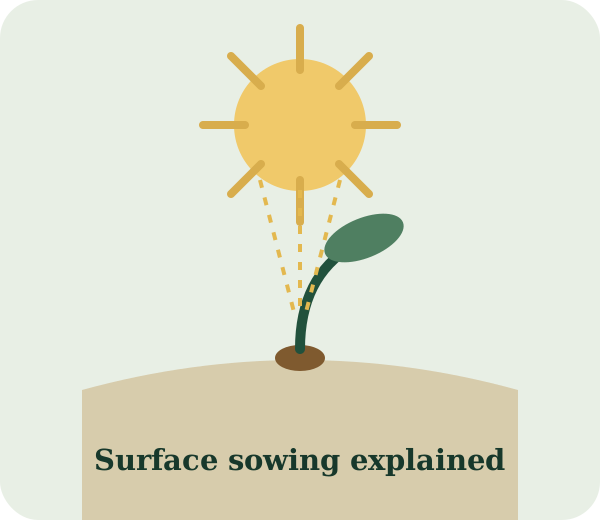
Surface sowing means placing the seed on top of a pre-moistened medium and pressing it gently into contact rather than burying it under a normal layer of compost. Depending on the species, a very fine dusting of vermiculite may be acceptable, but a thick cover defeats the purpose.
The RHS advises gardeners to check packet instructions because covering depth varies. Its germination guide specifically identifies some species as surface-sown because they require light.
GardenGrow Seeds Commonly Surface-Sown
| Plant | Typical approach | GardenGrow guide |
|---|---|---|
| German chamomile | Surface sow / do not bury deeply | Chamomile guide |
| Yarrow | Surface sow or very light cover | Yarrow guide |
| Feverfew | Shallow / surface-oriented sowing | Feverfew guide |
| Evening primrose | Often surface or shallow sowing | Evening primrose guide |
| Lavender | Very shallow; some light useful | Lavender guide |
These are general species-level patterns. Seed-company instructions for the exact species and cultivar should take priority.
How to Surface Sow Tiny Seeds
Keeping Surface Seed Moist
Surface sowing increases evaporation risk because the seed is exposed. A clear humidity cover can help during germination, but it should not turn the tray into a permanently dripping greenhouse. Once seedlings emerge, begin increasing ventilation.
Check the medium, not just the lid. Condensation on plastic does not guarantee that the seed surface is evenly moist.
Is a Sunny Windowsill Enough?
Sometimes—but windowsills are inconsistent. Glass reduces some light, day length may be short, and temperatures can swing sharply between sunny afternoons and cold nights. After seedlings emerge, University of Minnesota Extension recommends strong supplemental lighting for compact indoor seedlings when natural light is insufficient.
If seedlings lean, stretch or become pale, move the light closer according to the fixture manufacturer's safe distance rather than continuing to rotate a weak window tray.
After the Seed Germinates
Once the shoot emerges, the issue changes from germination to seedling growth. Remove or vent humidity covers gradually, provide bright light, allow airflow, and avoid keeping stems wet.
This distinction matters because germination light is a seed-specific trigger, while seedling light drives photosynthesis and compact growth after emergence. Even a species that germinated under cover needs adequate light once green tissue appears.
Common Surface-Sowing Mistakes
| Mistake | What happens | Fix |
|---|---|---|
| Covering tiny seed with ¼–½ inch of soil | Light is blocked; seedling may not reach surface | Follow surface/shallow sowing directions |
| Strong top watering | Seed floats or sinks unevenly | Pre-moisten, mist or bottom-water |
| Leaving tray sealed after emergence | Humidity stays high | Vent and improve airflow |
| Weak post-germination light | Leggy seedlings | Use stronger/closer suitable lighting |
| Sowing too densely | Crowding and poor airflow | Thin or prick out seedlings |
Planning a 10-Herb Garden?
If you are comparing a bundled way to start several traditional herb-garden plants together, GardenGrow has an independent overview of the Medicinal Garden Kit offer. The overview focuses on what is included, who the kit may suit and what to verify before ordering.
See the 10-Herb Kit Overview →The overview contains affiliate links. Product details can change; confirm current contents, price, shipping and terms on the seller's official page.
Frequently Asked Questions
What does surface sowing mean?
Place seed on top of pre-moistened growing medium and press it gently into contact instead of burying it under a normal layer of mix.
Do all tiny seeds need light to germinate?
No. Seed size and light response are related in some species but are not identical rules. Follow species-specific instructions.
Can I cover light-germinating seed with vermiculite?
A very thin dusting is sometimes used, but the correct amount depends on the species. Avoid a cover thick enough to block the recommended light exposure.
Should grow lights stay on 24 hours?
No. Seedlings benefit from a normal light/dark cycle. Follow the lighting guidance for your crop and equipment.
Why did my surface-sown seeds disappear?
Strong watering can float tiny seed into tray edges or wash it into cracks. Pre-moisten and water gently.
Sources and Editorial Notes
GardenGrow prioritizes university extension services, major horticultural organizations and practical propagation references. Gardening outcomes vary with climate, seed lot and cultivar; the exact packet instructions remain the most specific reference for your seed.