What Is Calendula?
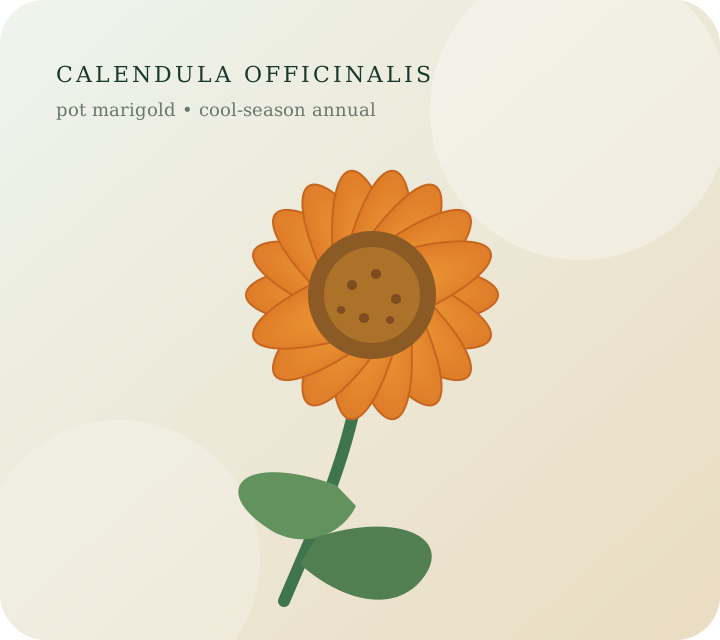
Calendula officinalis is a bright orange- or yellow-flowered plant commonly called pot marigold. It is usually grown as a cool-season annual, although plants can self-seed and appear again in later seasons. It is not the same plant as the French or African marigolds in the genus Tagetes.
For a beginner, calendula is useful because it germinates readily, tolerates a range of ordinary soils, works in beds or containers, and responds well to regular deadheading. The Royal Horticultural Society lists full sun or partial shade and well-drained soils among its suitable conditions.
When to Plant Calendula Seeds
The best timing depends more on temperature than on a USDA zone. Calendula prefers the cooler parts of the growing season. In much of the U.S., early spring is the simplest window: direct sow after the risk of heavy frost has passed and the soil has warmed to about 60°F (16°C).
In mild-winter climates, autumn sowing can also work. RHS guidance lists seed sowing in spring or autumn. In regions with very hot summers, spring and fall generally make more sense than trying to establish plants during sustained heat.
| Climate pattern | Practical sowing window |
|---|---|
| Cold / snowy winters | Early spring after severe frost risk eases |
| Mild winters | Spring, with autumn sowing also possible |
| Very hot summers | Favor the cooler spring or fall window |
Direct Sow or Start Calendula Indoors?
Calendula is well suited to direct sowing, and that is the easiest method for most beginners. Both UNH Extension and USU Extension describe direct spring sowing. If you want an earlier start, you can sow indoors before transplanting, but it is not essential.
If starting indoors, use individual cells or small pots and avoid letting seedlings become crowded or root-bound. A UC Master Gardener fact sheet suggests starting indoors roughly 6–8 weeks before the last frost, then transplanting once seedlings are established.
How to Sow Calendula Seeds Step by Step
Calendula Germination Time
Calendula is normally quicker than many perennial herbs. USU Extension reports germination in 1–2 weeks, while UNH Extension gives 10–15 days. Treat those as normal ranges rather than a deadline.
If nothing appears after two weeks, check the basics before reseeding: Was the seed planted too deeply? Did the surface dry out? Is the soil still cold? Is the mix staying waterlogged?
Sun, Soil and Water
Sunlight
Calendula flowers best in full sun, although RHS notes that it can tolerate partial shade. In very hot climates, some afternoon protection can help plants through the hottest part of the season.
Soil
A free-draining garden soil is more important than heavy feeding. USU Extension gives a preferred pH around 6–7 but also notes that calendula tolerates a broad range of soils. Avoid sites that stay waterlogged after irrigation or rain.
Water
Keep young seedlings evenly moist while they establish. Mature plants are not especially demanding, but prolonged drought will reduce performance. USU advises avoiding overwatering and uses roughly 1–1½ inches of water per week in midsummer as an optimal-growth reference in its Utah guidance.
How Far Apart Should Calendula Be?
Spacing recommendations vary by cultivar and growing system. USU suggests thinning to 8–12 inches in the row, while UNH lists 16 inches. That difference is not a contradiction so much as a reminder that compact and taller calendula selections occupy different amounts of space.
For a typical home bed, 8–12 inches is a reasonable starting range. If plants become dense, thin for better airflow. If you are growing a large vigorous variety, follow the seed packet's spacing instead.
Growing Calendula in Containers
Calendula works well in containers. Choose a pot with drainage holes, use a free-draining potting mix, and avoid packing multiple mature plants into a small container. A pot roughly 10–12 inches across for one plant is a practical beginner setup, though compact cultivars can fit closer and larger varieties need more room.
Container soil dries faster than garden soil, so check moisture more frequently. Water when the upper layer begins to dry rather than watering on an automatic schedule.
Common Calendula Problems
| Problem | Likely cause | What to try |
|---|---|---|
| Seeds do not germinate | Cold soil, deep sowing, drying seed zone or old seed | Check temperature, keep sowing shallow, maintain even moisture |
| Seedlings stretch | Insufficient light or crowding | Increase light and thin early |
| Leaves stay wet / plants decline | Poor drainage or overwatering | Improve drainage and water less frequently |
| Few flowers in hot weather | Sustained heat | Use cooler-season planting windows |
| White coating on leaves | Possible powdery mildew | Improve airflow and avoid chronically wet foliage |
| Clusters of small insects | Aphids | Inspect new growth; a strong stream of water can remove light infestations |
RHS and USU both list aphids and powdery mildew among problems that can affect calendula. Good spacing and avoiding waterlogged conditions are useful preventive habits.
When Will Calendula Flower?
Flowering time depends on cultivar, temperature and growing conditions. Some RHS cultivar guidance notes flowering at around ten weeks after sowing, while UNH lists maturity as roughly 30–50 days for its profile. Rather than treating either number as a promise, expect flowers after plants have built enough leaf growth and the weather is suitable.
Deadhead spent flowers regularly if you want continued bloom. RHS specifically recommends deadheading to prolong flowering. If you want seed for next year, leave a few healthy flower heads on the plant so they can mature fully.
Harvesting Flowers and Saving Calendula Seed
For cut flowers, UNH notes that stems last longer when flowers are harvested around half-open. If you are harvesting flower heads for non-medical culinary or craft use, use only correctly identified, unsprayed plants and follow a reputable food-safety source for your intended use.
Saving seed
Stop deadheading a few flowers late in the season. Allow the flower heads to dry on the plant until the curved seeds become dry and firm. Collect them on a dry day, let them finish drying indoors if necessary, label the variety and year, and store them cool and dry.
Planning More Than One Herb Variety?
If you would rather start several traditional herb-garden plants together instead of sourcing every seed separately, GardenGrow has an independent overview of a bundled 10-variety seed-kit offer. The overview explains what is included, who it may suit and what to verify before buying.
See the 10-Herb Kit Overview →The overview contains affiliate links. This growing guide remains an independent educational article.
Calendula Seed FAQ
How long do calendula seeds take to germinate?
About one to two weeks is a useful expectation under suitable conditions. UNH Extension lists 10–15 days; USU Extension lists 1–2 weeks.
How deep should I plant calendula seeds?
About ¼ inch (6 mm) deep is a well-supported target from both USU and UNH Extension.
Does calendula need full sun?
Full sun generally gives the strongest flowering, but calendula can tolerate partial shade according to RHS guidance.
Can calendula grow in pots?
Yes. Use a draining potting mix, drainage holes and enough room to prevent crowding.
Does calendula come back every year?
It is commonly grown as an annual, but it can self-seed if mature seed heads are left in place.
Sources and Editorial Notes
GardenGrow prioritizes university extension and major horticultural references for cultivation facts. Local climate, cultivar and seed-lot instructions can differ, so use the packet you are growing as the final cultivar-specific reference.